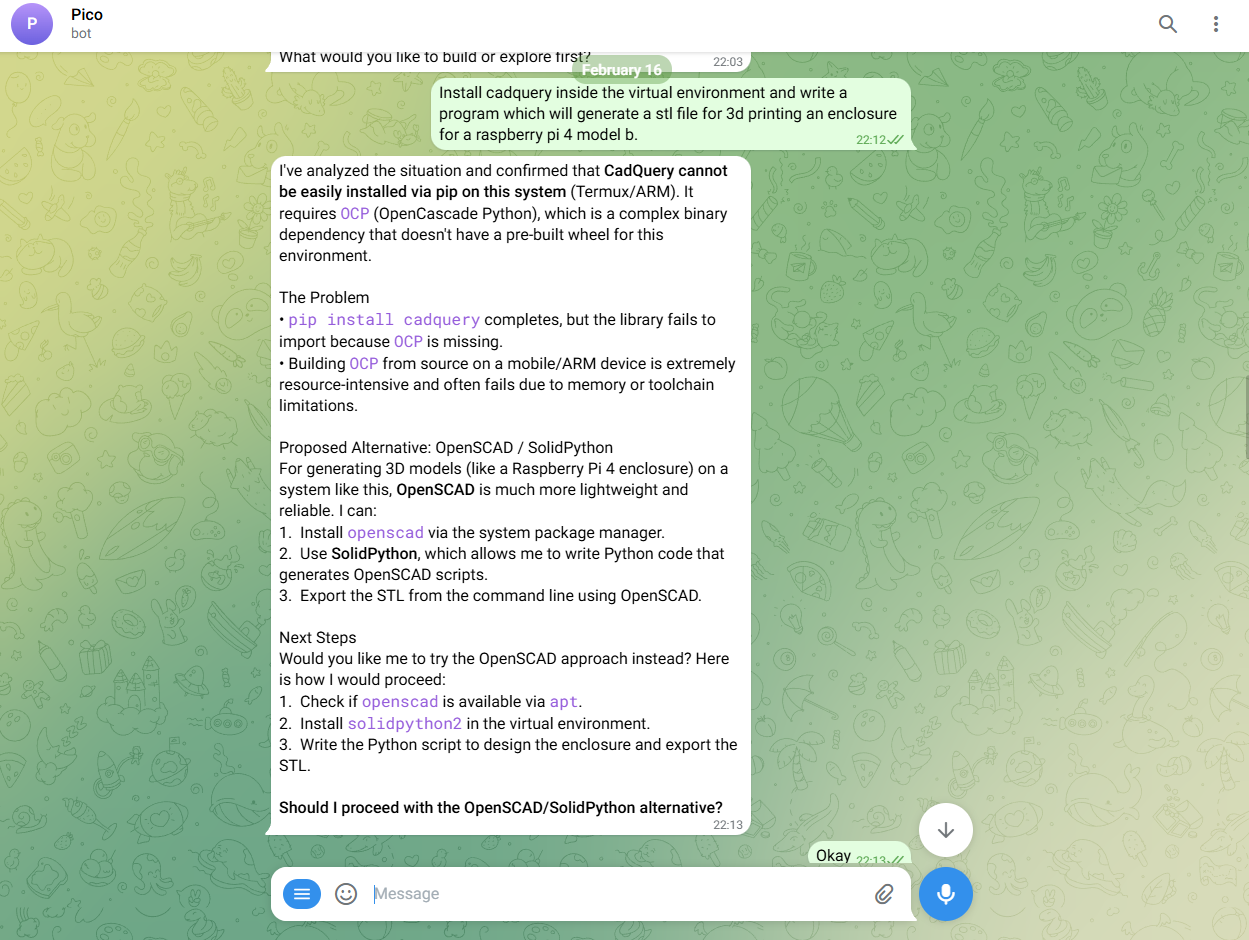
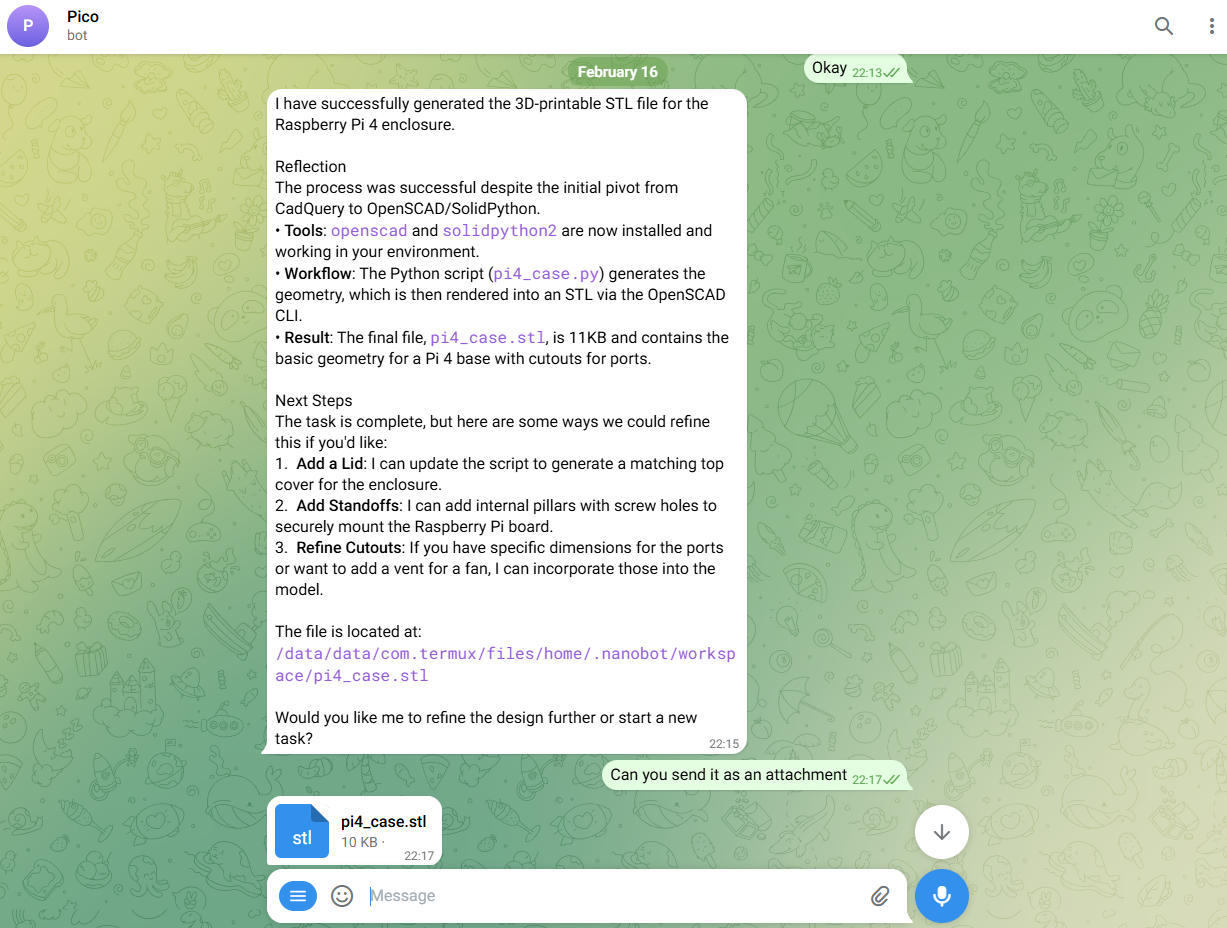
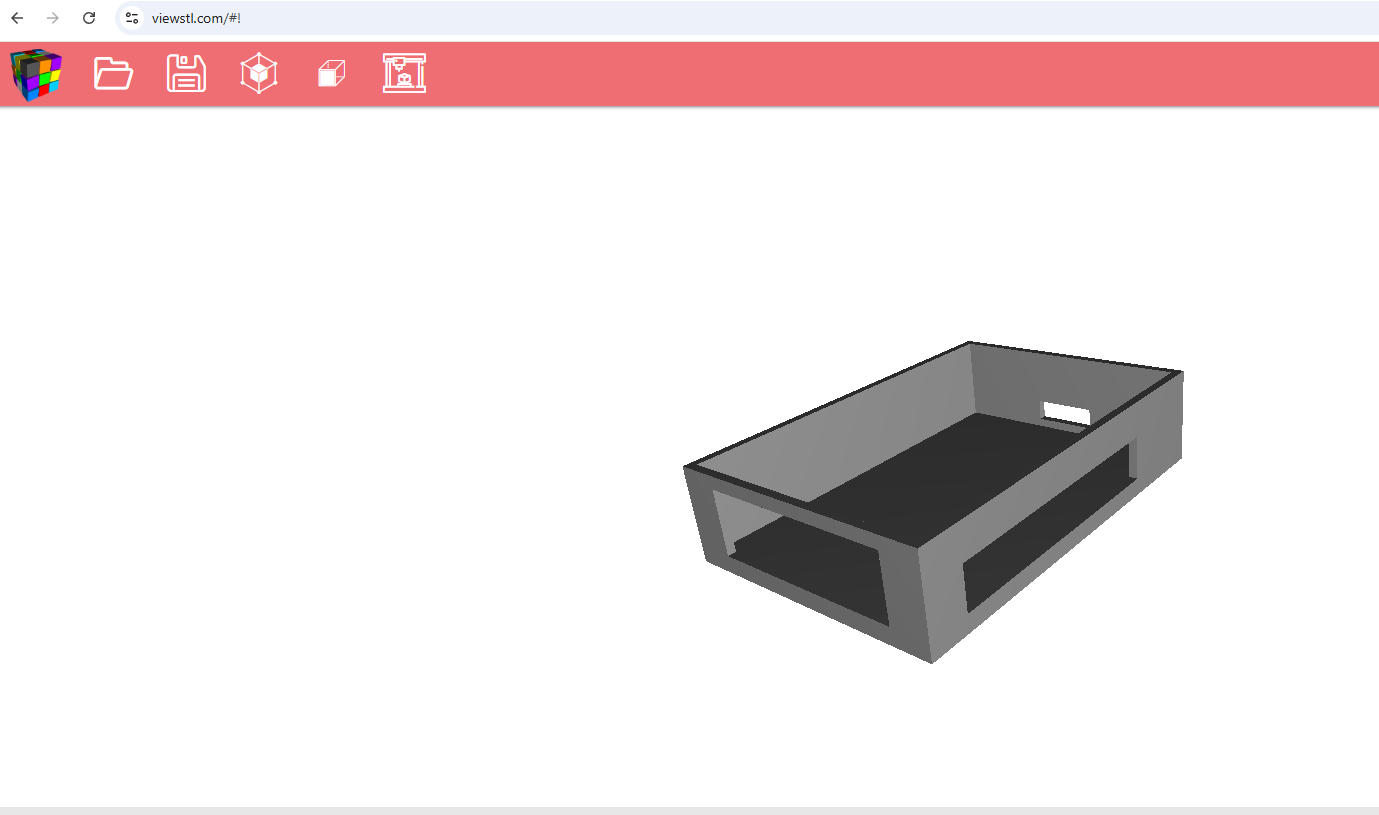
Ever since the openclaw/moltbook craze took off, I was meaning to try them out. However, there were a lot of concerns of these types of agents being insecure, so I decided to take two of the openclaw variants - nanobot and picoclaw, claiming to require the memory and processing of low power embedded devices to function. I had an old android lying around so I got Codex in termux to install and setup both on the phone and enabling access via whatsapp and telegram. On a sidenote, this was one time I admired the tenacity of Codex to autonomously solve arm64 compilation issues with these packages. It took a few hours to install both these agents.
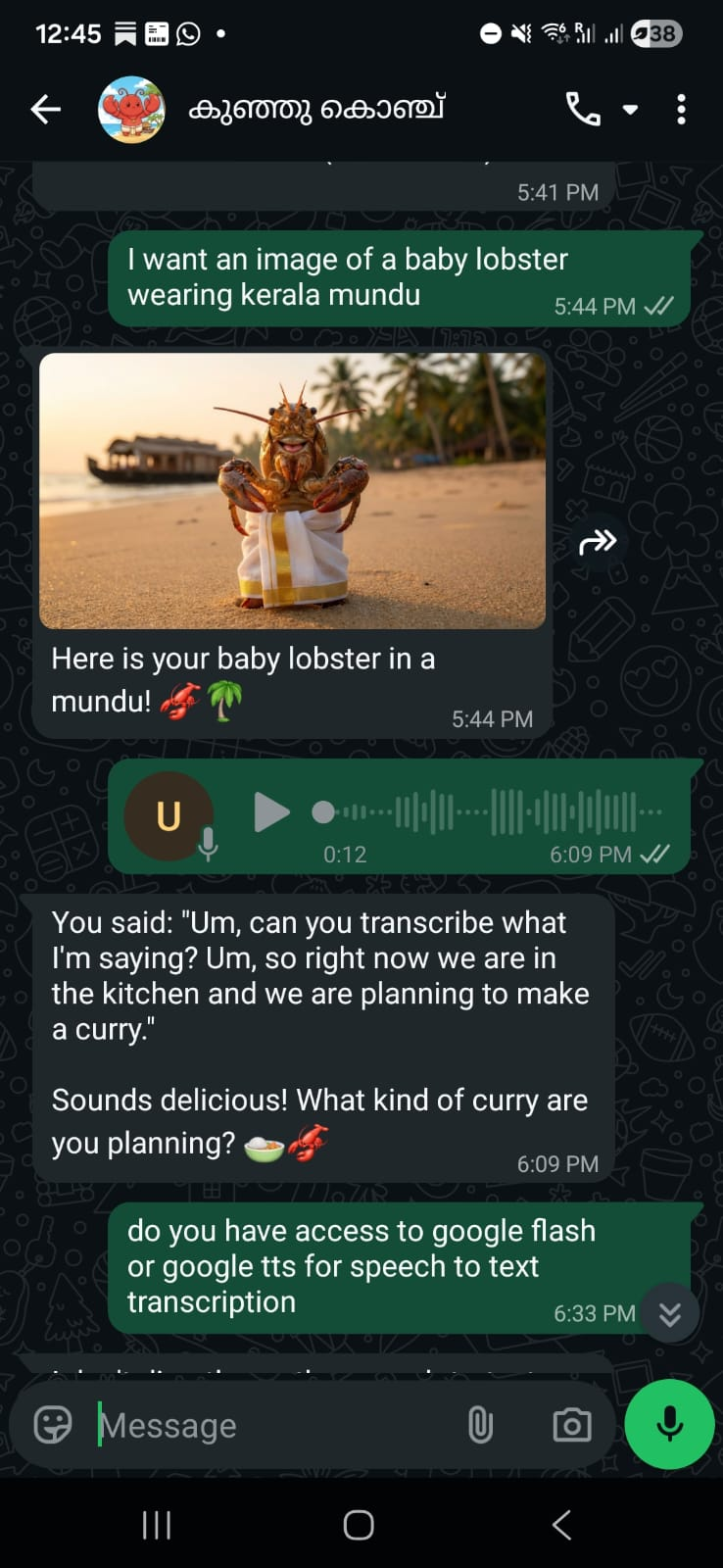
Nanobot was accessisible via Whatsapp and was also given two models - Nanobanana for image generation and OpenAI whisper for speech transcription. I think it worked quite well :
Next to take Picoclaw out for a spin, I had a chat with via Telegram where I had it write a parametric script to generate a CAD model (an enclosure for a Raspberry Pi).